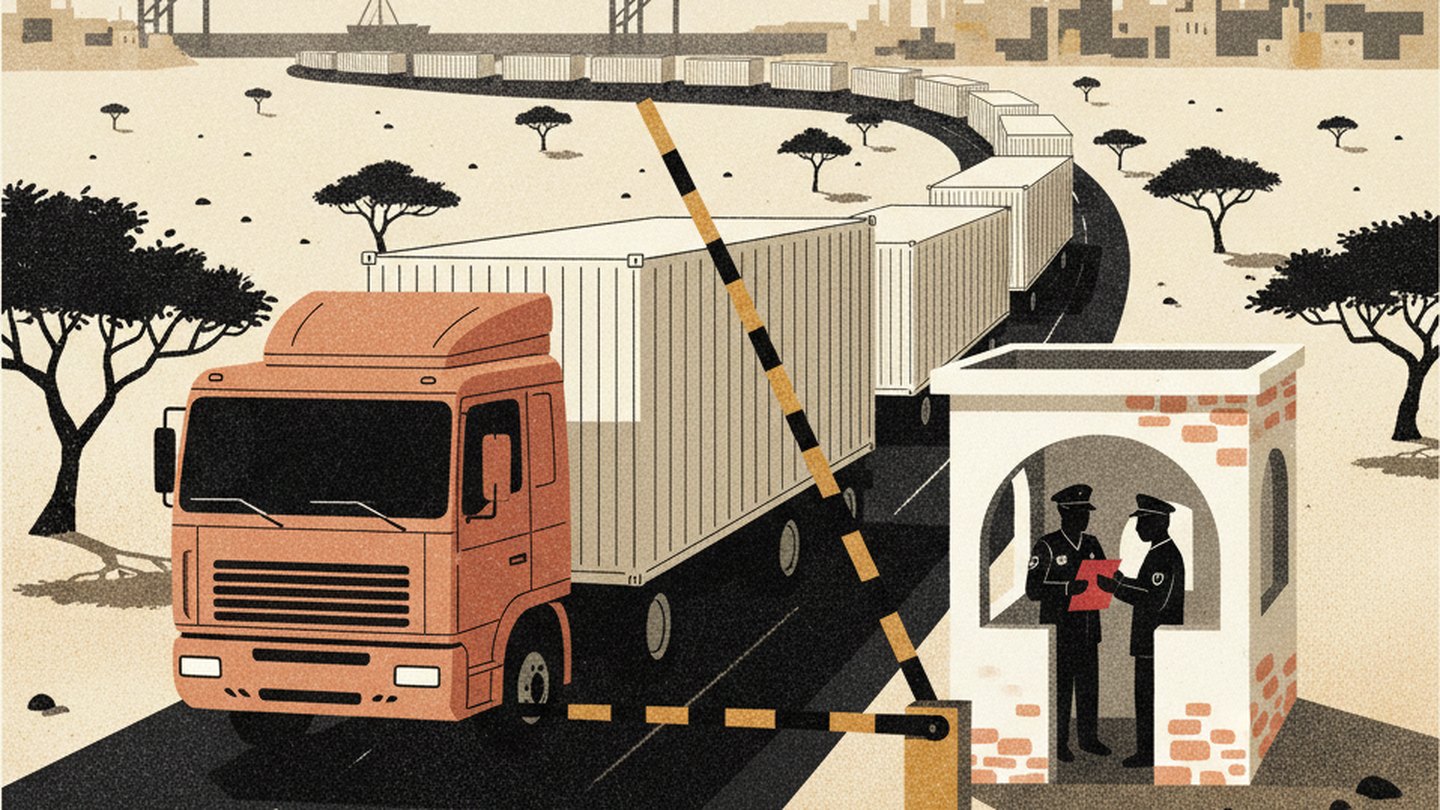
Every few months a client asks whether "the free trade area" means they can now move goods into Somalia tariff-free. The honest answer is a question back: which free trade area — and have you read what it actually did on day one? Usually the answer to the second part is no. That is not their fault. Trade-bloc accession generates more headlines per unit of immediate legal change than almost anything a government does.
01 — The two dates that matter
On 4 March 2024, Somalia deposited its instrument of ratification of the Treaty of Accession with the East African Community and became the bloc's eighth Partner State. On the continental track, Somalia's AfCFTA instrument was scheduled for deposit on 2 September 2026 — the step that makes it the 50th State Party — a timetable set out publicly around the AfCFTA Secretary-General's visit to Mogadishu in mid-August 2026.
Two accessions, two blocs, two very different timetables. And neither changed the customs bill on a container at Mogadishu Port the next morning. Holding both of those facts at once — genuinely consequential, not yet operational — is the entire skill of reading this subject.
02 — Ratified is not deposited
Here is the trap in the headlines. Through August 2026 you could read that Somalia had "signed", "ratified" and "officially acceded to" the AfCFTA — and each report was describing a real event. But treaty accession is a chain, not a moment: domestic signature and ratification are internal steps; a state becomes a State Party when it deposits its instrument with the African Union. Until the deposit, the domestic steps bind nobody across a border.
This distinction sounds like pedantry until it prices a shipment. A supplier who reads "Somalia accedes" and quotes preferential duty into a contract has converted a headline into a payment obligation. When the customs officer at the port applies the tariff that actually exists, the gap between the two numbers belongs to whoever signed the price. We have seen versions of this movie in other reform areas; the treaty version is simply better publicised.
03 — What accession actually does
It creates obligations between states. It opens the door to protocol schedules — tariff phase-downs, rules of origin, services commitments — and starts the clocks that run on them. It plugs Somalia into dispute mechanisms that operate between governments, not between traders. Read that list again and notice what it does not contain: nothing in it, by itself, moves a rate at a border post.
It also does something subtler that matters more for our clients: it forces domestic law to modernise on an external timetable. Somalia's customs, standards and registration frameworks now have deadlines and reviewers outside the country. That pressure — not the tariff schedule — is the real engine of near-term legal change, and it is already visible in the reform pipeline this blog tracks: the new income-tax regime, the financial-institutions overhaul, the business-registration bill.
04 — What it doesn't do yet
Preferential trade needs a chain of its own, and every link must exist before the discount does: agreed and adopted tariff schedules; rules of origin with a working certificate regime; domestic legal instruments giving customs officers the authority to apply the preference; and the administrative practice of actually applying it, consistently, at the ports of entry. Break any link and the treaty remains what it is today — a direction of travel, not a discount.
So the operating rule for 2026–27 contracts is blunt: any supplier pricing "AfCFTA rates" into a Somalia contract today is pricing a rumour. Quote the tariff in force; structure for the tariff to come.
05 — Two blocs, one border
Somalia now sits inside two integration projects at once, and they are not the same machine. The EAC is the deeper commitment: a customs union and common market with its own tariff architecture, standards regime and institutions, which Somalia joined as a full Partner State in 2024 and is now progressively operationalising. The AfCFTA is broader and shallower: a continental framework whose value arrives protocol by protocol, schedule by schedule.
For a business, the practical consequence is that "can I trade into Somalia preferentially?" has two different answers with two different timetables — and the EAC answer will often mature first. Routing decisions for East African trade should be run against both regimes, on both today's rules and each bloc's committed direction. The answer sometimes flips, and the businesses that model it early choose better warehouse locations than the ones that read about it later.
06 — The first-shipment test
The AfCFTA Secretary-General's Mogadishu visit was framed, publicly and well, as the road "from ratification to the first shipment." That phrase deserves to be taken literally, because the first preferential shipment is a test with a checklist: a Somali exporter or importer, holding a certificate of origin issued under a functioning regime, clearing goods at a rate drawn from an adopted schedule, applied by a customs administration whose instruments and systems recognise it. The day that happens, this article is out of date — and we will happily write its successor.
Until then, the professional discipline is to track the mechanism, not the announcement: which protocols Somalia schedules, when the origin regime stands up, what the customs instruments say. That is unglamorous work. It is also where the money is.
07 — What to do about it now
PRACTICAL CHECKLIST
Price contracts on the tariff in force — never on an announced preference that has no schedule behind it.
Write change-of-law clauses so tariff changes flow through automatically instead of triggering renegotiation.
Paper your origin position now — when preferences switch on, the businesses that can prove origin capture them first.
Model East African routing against both the EAC and AfCFTA tracks, on today's rules and the committed direction.
Assign someone — internal or counsel — to track the mechanism: schedules, origin regime, customs instruments.
The pattern repeats across Somali law, and it is worth internalising: the announcement and the mechanism arrive years apart. The clients who do well in this market are the ones whose lawyers track the mechanism.
HA
Hamza I. Abdullahi led the Ministry of Justice's legislative drafting unit and has spent a career watching the distance between what a law announces and what it operationalises.
Full profile →